Thermal Analysis
EXCELLENCE IN THERMAL ANALYSIS
High-performance measurement solutions for accurate, reliable, and sustainable thermal characterization of materials.
Thermal Analysis
DSC – Differential Scanning Calorimetry
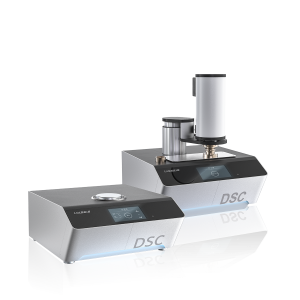
Differential scanning calorimetry (DSC) is a proven method for the precise analysis of thermal transitions and energy processes in solid, liquid, and powdered materials. It enables the reliable determination of key parameters such as melting, crystallization, and glass transition, and is an essential tool for research, development, and quality control.
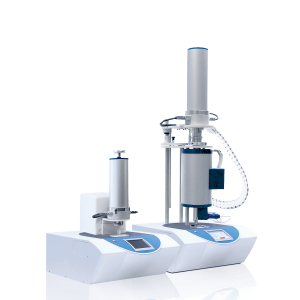
STA – Simultaneous Thermal Analysis
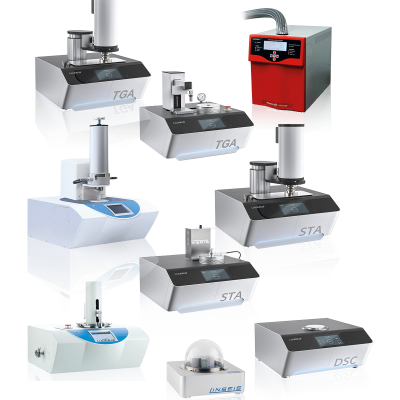
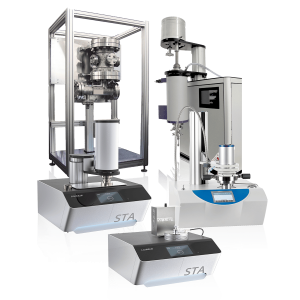
Simultaneous thermal analysis (STA) combines thermogravimetry (TG) and differential scanning calorimetry (DSC) in a single measurement on a single sample. This approach enables comprehensive and consistent characterization of thermal phenomena and mass changes, while maximizing informative value and analytical efficiency. Simultaneous thermal analysis (STA) combines thermogravimetry (TG) and differential scanning calorimetry (DSC) in a single measurement on a single sample. This approach allows for comprehensive and consistent characterization of thermal phenomena and mass changes, while maximizing informative value and analytical efficiency.
TGA – Thermogravimetry
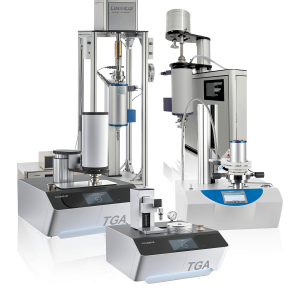
Thermogravimetry (TGA) is a standard analytical method for the precise analysis of mass changes in materials as a function of temperature and time. It provides key information on thermal stability, composition, decomposition processes, and oxidation, and is an indispensable tool for research, development, and quality control.
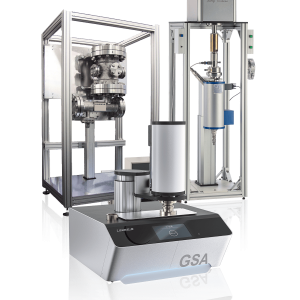
GSA – Gravimetric Sorption Analysis
GSA LINSEIS systems offer independent control of pressure, temperature, and gas dosing, from ultra-high vacuum to high pressures. They guarantee reliable, reproducible, and highly informative results for the most demanding analytical applications.
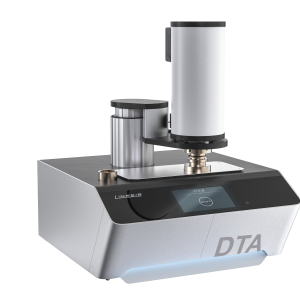
DTA - Differential Thermal Analysis
LINSEIS ATD systems enable precise measurement of thermal effects such as melting, crystallization, or glass transition, even under controlled atmospheres or in a vacuum. They are a robust and versatile solution for research, development, and quality control.
TMA – Thermomechanical Analysis
Thermomechanical analysis (TMA) enables accurate measurement of the dimensional and mechanical variations of materials as a function of temperature and applied load. It provides essential information on the thermomechanical behavior, expansion, deformation, and viscoelastic properties of materials, and is a key tool for research, development, and quality control.
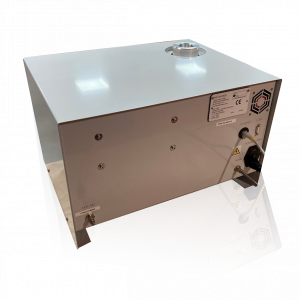
L40 HUM - Humidity Generator
The UHG relative humidity generator is a compact, portable, and fully automated benchtop instrument. It guarantees a constant flow of air or nitrogen with precisely controlled relative humidity, while maintaining a stable temperature.